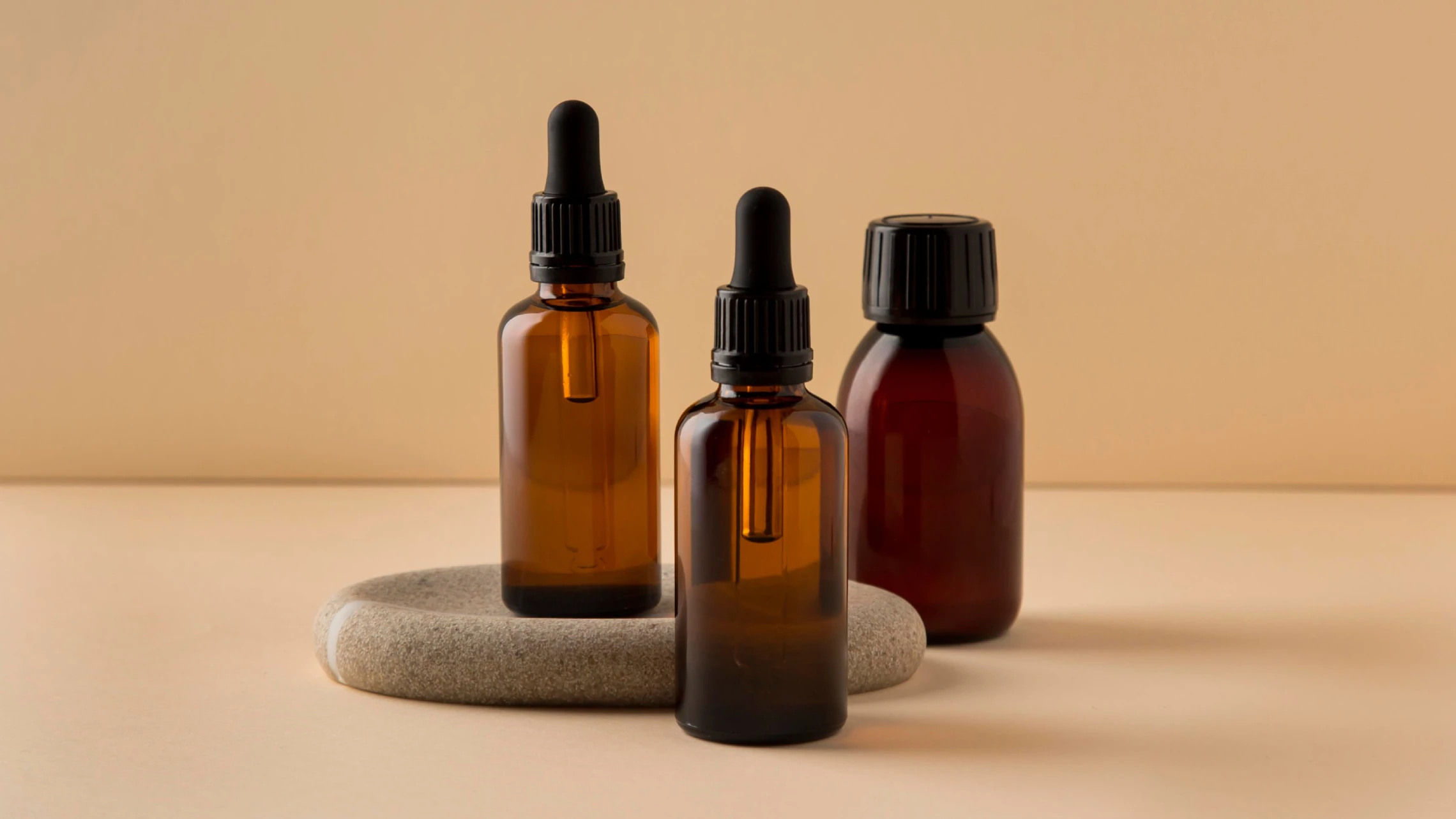
This fungal acne routine is designed for people experiencing skin concerns that can worsen when Malassezia yeast becomes overactive. These may include:
- Malassezia Folliculitis (“fungal acne”)
- Seborrheic Dermatitis (dandruff or facial scaling)
- Pityriasis Versicolor
- Razor Bumps, Barber’s Itch, or Hot Tub Rash
- Yeast-triggered Eczema
When Malassezia is overactive, the primary goal is simple: stop feeding it. This means setting aside conventional skincare products and switching to a strictly microbiome-safe, barrier-supportive routine free of specific lipids and fatty acids that encourage yeast growth.
Note: The specific product names mentioned below are formulated to be 100% Malassezia-safe. You can use any commercial alternatives you have that fit these rules, or find the exact recipes to make them yourself in the DIY resource at the bottom of this post!
These steps are designed to work in sequence. Following the correct order helps each product perform optimally and supports recovery.
☀️Morning Routine (3 Required Steps)
Protect and hydrate your skin for the day ahead without creating an environment where yeast can thrive.
- Cleanse (Required) — Use Hydrating Cleanser to refresh and prep the skin. It’s preferred in the morning because it removes overnight sweat and other water‑soluble buildup more effectively than oil cleansing. An oil cleanser can be used instead if your skin feels exceptionally dry.
- Treat (Optional) — Apply Super Serum to clean, slightly damp skin to deliver targeted actives. Skip this step if your skin is highly irritated.
- Moisturize Face & Body (Required) — Use Malassezia Moisturizer to protect and hydrate. Tip: This can also be used as a targeted spot treatment for emerging fungal bumps.
- Sun Protection (Required) — Avoid heavy, creamy sunscreens that feed fungal acne. They often contain fatty acids and esters (many ending in -ate) that feed the yeast. Opt for ultra-lightweight silicone-based fluids or formulas explicitly labeled “fungal-acne safe.”Use a mineral powder sunscreen to reapply as needed with a clean brush or sponge.
- Makeup (Optional) — Stick to a Mineral Powder Foundation (ideal for oily or fungal-prone skin) or oil-free, silicone-based makeup.
- Stop Shine (Optional) — Apply a mattifying face powder to reduce midday shine and blur pores. Reapply throughout the day as needed.
- Clean Applicators (As Needed) — Malassezia thrives on dirty tools. Wash your makeup brushes and sponges immediately after each use using a Malassezia-safe Oil Cleanser followed by Hand Wash.
🌙Evening Routine (2 Required Steps)
Follow these steps to dissolve the day’s buildup, disrupt yeast biofilms, and repair the skin barrier overnight.
- Cleanse with Oil (Required) — Use Malassezia-safe, non-comedogenic Oil Cleanser based on Caprylic/Capric Triglycerides (MCT Oil without lauric acid) to dissolve buildup without feeding yeast or stripping natural moisture.
- Exfoliate & Balance (Optional, up to twice a week) — Apply Manuka Mud Treatment Mask to smooth, purify, and balance the skin barrier while helping disrupt the yeast biofilm that allows Malassezia to persist.
- Cleanse & Hydrate (Optional) — Use Hydrating Cleanser to remove invisible microbiome disruptors. Use after Manuka Mud to fully remove the mask.
- Treat (Optional) — Apply Super Serum to clean, slightly damp skin to deliver targeted actives. Skip this step if your skin is actively raw or highly irritated.
- Moisturize Face & Body (Required) — Apply MCT Oil or Malassezia Moisturizer to calm itch, soothe irritation, and seal in moisture without feeding yeast.
💇Scalp Care (3 Required Steps)
If your fungal overgrowth extends to your scalp as dandruff or seborrheic dermatitis, use this quick 3-step wash routine:
- Treat — Apply a thin layer of Manuka Mud Treatment Mask directly to the damp scalp. Leave it on for a few minutes to break down fungal buildup before washing.
- Cleanse — Use a fungal-safe shampoo designed to cleanse the scalp thoroughly without feeding Malassezia or stripping the skin barrier.
- Moisturize — Work a small amount of MCT oil or Malassezia Moisturizer onto the scalp after rinsing to calm irritation and support barrier recovery.
🔄 Any-Time Treatments
These products can be used at any time, in any order, as needed.
- Moisturize Lips — Use Lip Butter to protect and hydrate your lips. Don’t use around the eyes or cuticles if those areas are fungal-prone.
- Stop the Stink — Apply Peaceful Pits Liquid Deodorant, which is uniquely formulated to control odor without triggering fungal-prone skin.