

Your skin isn’t just a surface — it’s a living, layered defense system. Its job is simple: keep hydration in and keep irritants, bacteria, and pollution out.
With so many trending skincare ingredients, it’s incredibly easy to overdo things without meaning to. If your face suddenly feels red, stingy, or breakout‑prone, you might be dealing with a damaged skin barrier.
If you are trying to figure out how to tell if your skin barrier is damaged, here’s exactly what it does, what throws it off, and how to bring it back.
The outermost layer of your skin — the stratum corneum — is your body’s primary shield. In the skincare world, we call this the skin barrier.
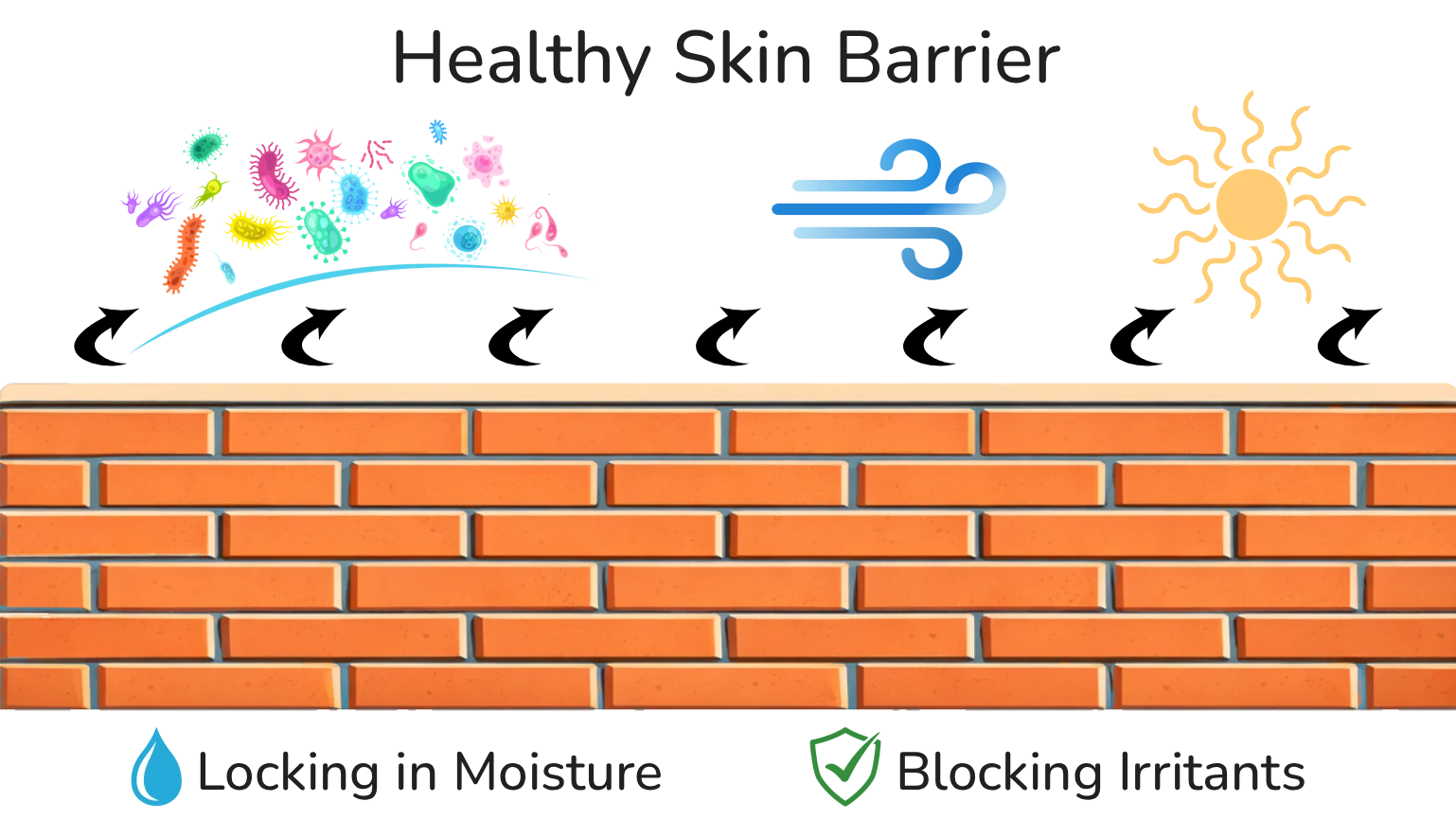
Think of it as a brick wall:
When your skin’s natural barrier is working properly, it keeps moisture in and shields you from UV, harsh weather, and everyday irritants.
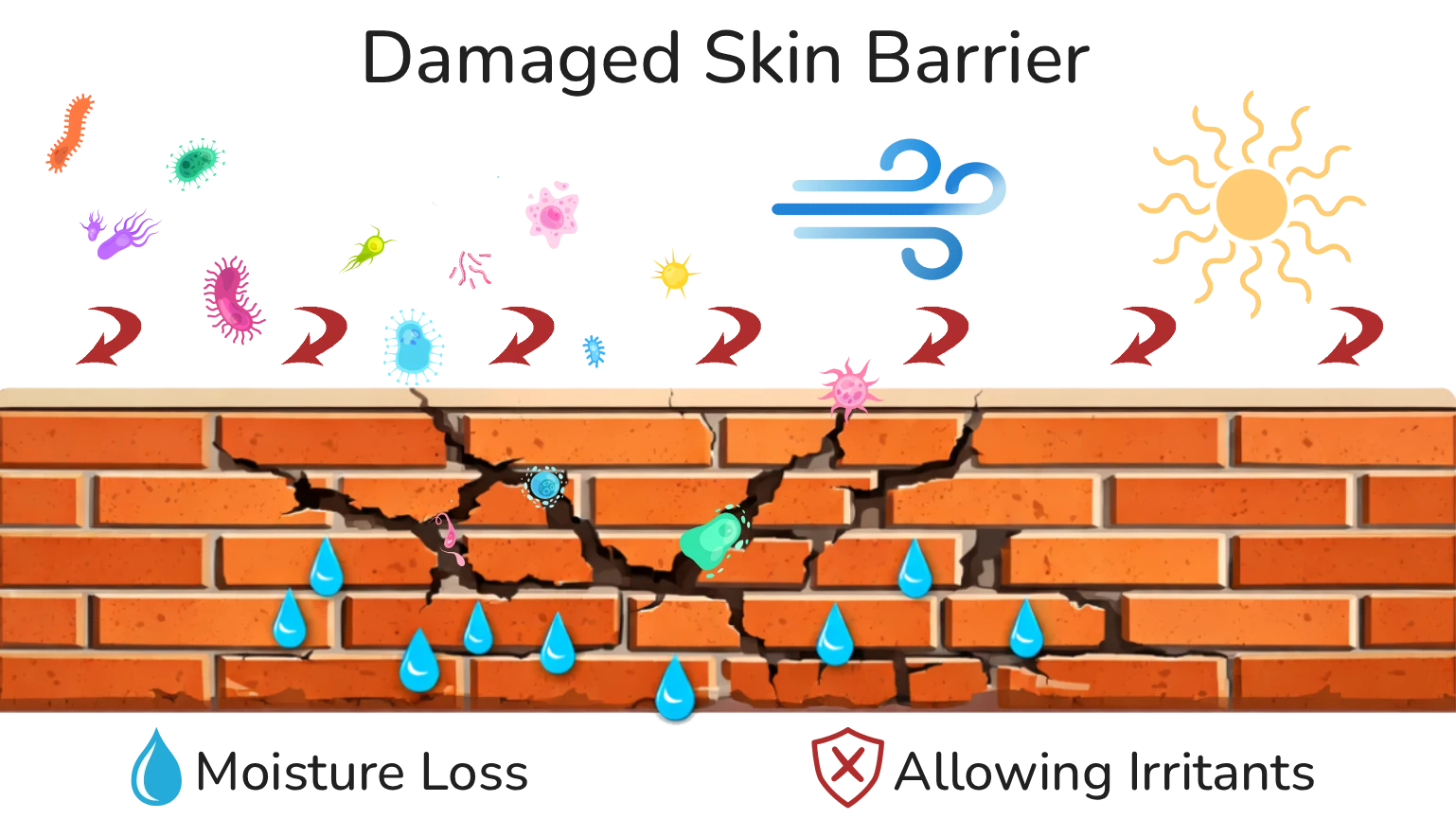
When the barrier weakens, tiny gaps form in that “brick wall. Moisture escapes (called transepidermal water loss), and irritants slip in.
You may notice the following:
You can’t control your genes, getting older, or the weather. But you can avoid daily habits that gradually weaken the barrier.
When the outer layers of your skin get thinner, it’s easier for things to irritate it. Your skin’s barrier is made up of about 10 to 30 layers of cells. But if you use too many scrubs, acids, or strong retinoids, you can strip away these layers faster than your skin can renew them. It’s like removing the protective armor that keeps your skin safe, making it more prone to irritation and damage.
When your natural lipid layer breaks down, moisture escapes quickly. Hot water and harsh surfactants dissolve the lipids that keep the barrier intact, leaving the skin reactive and dehydrated.
Your skin has its own community of beneficial bacteria that help keep things balanced. Over‑cleansing and antibacterial products disrupt this microbial balance, which makes the skin more prone to irritation.
Chronic stress raises cortisol levels, slowing the skin’s repair processes and increasing inflammation.
What you eat shows up on your skin. High‑sugar and highly processed foods contribute to systemic inflammation, which often appears on the skin as breakouts, dryness, or eczema.
The good thing is, your skin has a way to fix itself. If you stick to a simple skincare routine, it can bounce back fast.
Pause all actives — retinoids, vitamin C, exfoliating acids. Use a gentle hydrating cleanser and a barrier‑repair moisturizer. Try a “skinimalism” routine.
Look for moisturizers with ceramides, sodium PCA, propanediol, glycerin, and squalane to rebuild the “mortar” of your barrier.
Support your skin from the inside with healthy fats, antioxidant‑rich fruits, and plenty of water (see A Healthy Skin Diet).
If you’re trying to repair your skin barrier and want a routine that actually makes sense, my book Simple DIY Skincare: The Complete Guide to Easy, Natural Recipes for Beginners can help you go deeper. It walks you through building a skincare routine that supports your barrier long‑term — not just in emergencies — with clear explanations, ingredient breakdowns, and step‑by‑step methods you can actually follow to customize the products you put on your skin.
If you found this guide helpful, you’ll love the full book. It’s designed to take the guesswork out of skincare so you can understand your skin, choose products with confidence, and create routines that work for your skin.