
Whether you are just beginning to look for safe alternatives to aluminum antiperspirants or are currently navigating the natural deodorant transition, understanding how your skin microbiome functions is the key to lasting freshness.
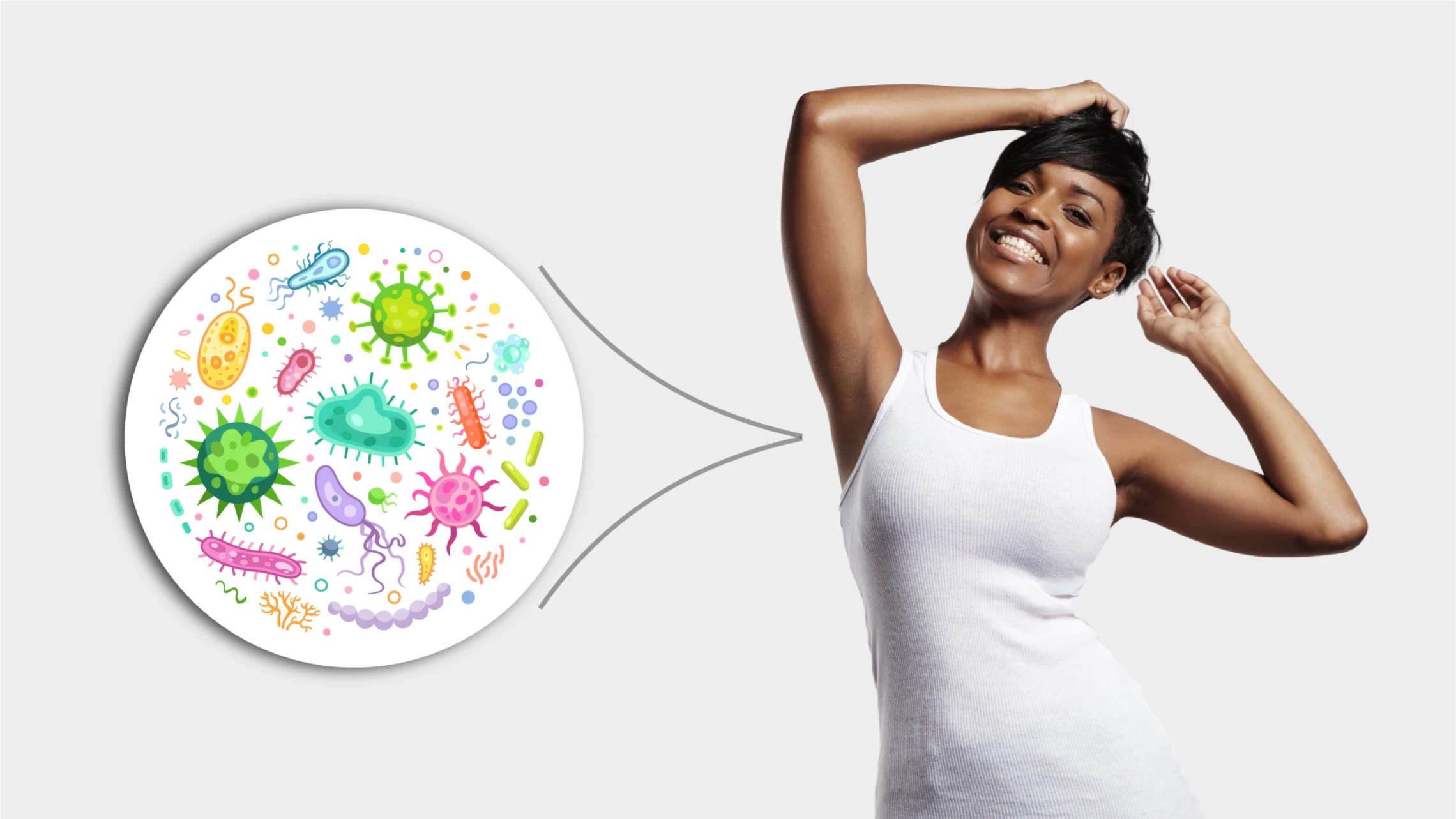
Sweat itself is odorless. It is mostly water, salt, and minerals designed to keep you cool. The “body odor” scent only appears when bacteria on your skin (specifically a common type called Staphylococcus hominis) begin to feed on the proteins and fats found in your sweat [1]. As they “eat,” they produce sulfur-based compounds that create that distinct smell [2].
Your individual “scent profile” is dictated by your skin microbiome, which is influenced by:
These products are often used interchangeably, but they function in fundamentally different ways.
| Feature | Antiperspirant | Deodorant |
|---|---|---|
| Primary Goal | Controls both sweat and odor | Controls odor only |
| Active Agents | Uses aluminum salts (e.g., Aluminum Chloride, Aluminum Chlorohydrate, Aluminum Zirconium) | Uses antimicrobial agents or pH adjusters |
| Mechanism | Prevents the body’s natural cooling process by plugging glands | Neutralizes odors or uses antimicrobial agents to create an environment where odor-causing bacteria cannot thrive |
| Application Timing | Best applied at night on clean, dry skin | Best applied in the morning or as needed on clean, dry skin |
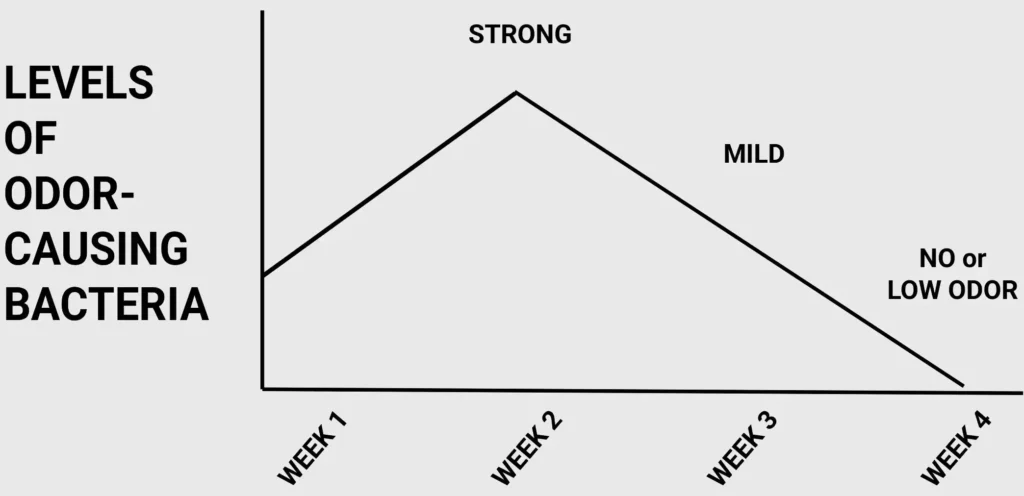
Recent research has shown that habitual use of antiperspirants can actually shift your armpit’s bacterial ecosystem [1]. By blocking the sweat glands and altering the skin’s environment, these products can favor the growth of certain odor-producing bacteria [4]. When you stop using antiperspirants, your skin goes through a transition period as your natural microbiome rebalances. During this time, it is normal to experience a temporary increase in odor [1].
Both categories can contain ingredients that trigger contact dermatitis or disrupt the delicate skin barrier. Common irritants to avoid include:
A good deodorant needs more than just oils. While oils and butters help the product glide and condition the skin, they don’t manage odor or moisture on their own. Look for well‑formulated anhydrous (water‑free) deodorants that include ingredients designed to support the skin and control odor naturally.
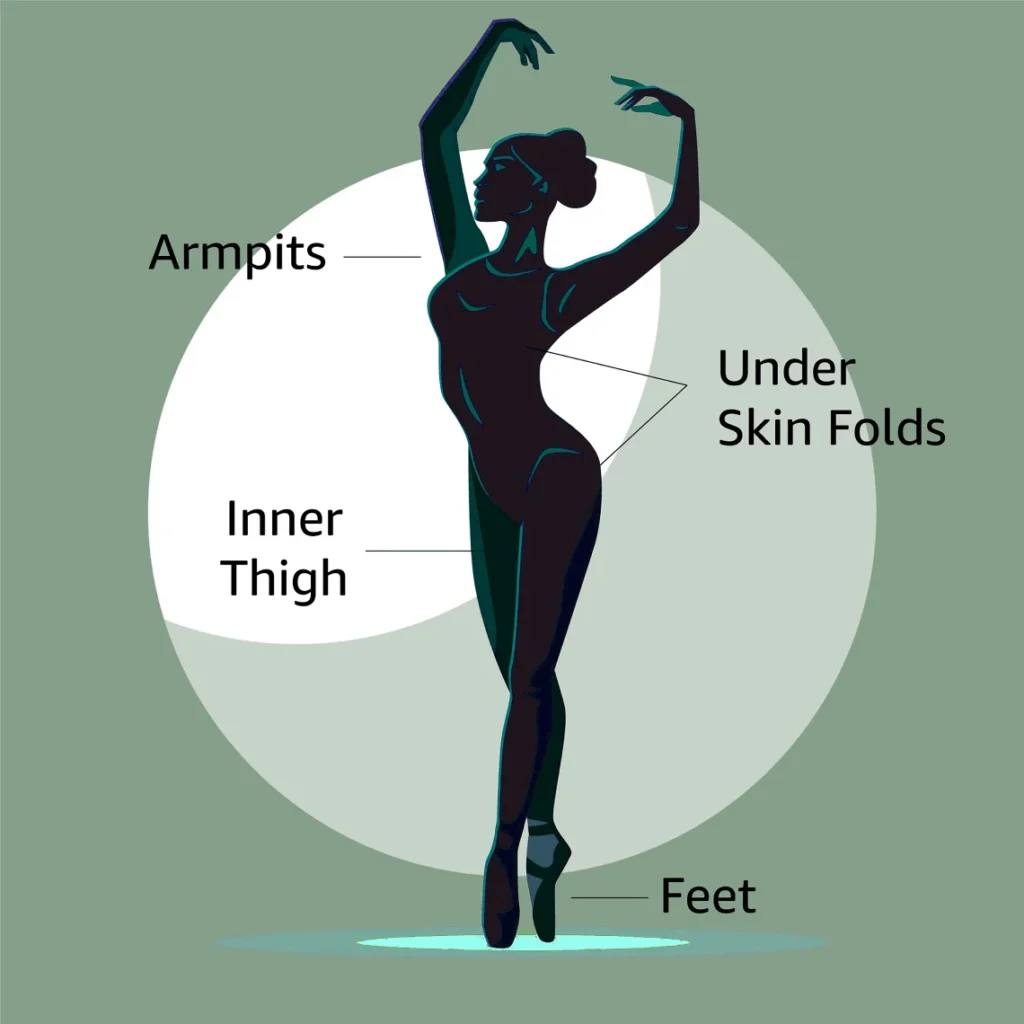
You may also see many popular “whole‑body” deodorants that are water‑based. These formulas work by gently lowering the skin’s pH. Odor‑producing bacteria prefer a more neutral environment, so making the skin slightly more acidic can help reduce smell. Water‑based deodorants are usually lightweight sprays or lotions designed for external use on areas like the underarms, inner thighs, groin folds, under‑breast folds, and feet.
Lowering the pH a little can be helpful.
Lowering it too much can cause problems.
Because these areas have thinner, more delicate skin, products that sting, burn, or feel sharp can lead to irritation, redness, or even more odor over time. If a product causes noticeable tingling or discomfort, it’s too acidic for that area.
Water‑based deodorants can be a good option for people who prefer a quick‑drying, non‑powdery feel. However, they are not universally tolerated. People with sensitive skin, chafing, or a history of yeast irritation may find that gentler, water‑free formulas are more comfortable and less likely to disrupt the skin barrier.
If you’ve used aluminum antiperspirants for years, your skin has been “plugged.” When you stop, your sweat glands will start working normally again. You might notice a temporary increase in moisture or odor while your skin microbiome—that community of good bacteria—rebalances itself [1].
Pro Tip: Be patient! It usually takes a few weeks to adjust.
I developed my Simple DIY Skincare formulas to put these principles into practice, focusing on supporting the skin’s natural processes rather than blocking them. Here is how these science-backed categories work together in my routine:
Beyond your products, your daily habits have a significant impact:
Odor doesn’t only happen in the center of the armpit. Anywhere the skin is warm, a little sweaty, and doesn’t get much airflow, bacteria can build up and create smell. This includes places like under‑breast folds, belly folds, the crease where the thigh meets the groin, the inner thighs themselves, and the feet.
For places like inner thighs or groin folds, choose gentle deodorants. These areas have thinner, more delicate skin, so anything that stings, burns, or feels sharp is too strong. A mild pH‑adjusting ingredient can help reduce odor, but if a product causes discomfort, it’s likely too acidic for that part of the body and may actually make odor worse over time.
There is a long-standing debate about whether aluminum in antiperspirants is harmful [5]. While recent large-scale studies haven’t found a direct link to health issues like cancer [5], the FDA does suggest that people with chronic kidney disease should check with their doctor before using them, as the kidneys are responsible for filtering out excess minerals.
When to See a Professional: If you’ve tried these tips and still feel that your body odor is unusually strong or frequent, it is always a good idea to speak with a doctor or dermatologist to rule out any underlying health concerns. To find a qualified expert near you, you can use the American Academy of Dermatology (AAD) Find-a-Dermatologist tool. They can help you identify if a condition like hyperhidrosis (excessive sweating) is a factor and discuss appropriate medical treatments if lifestyle changes are not enough.
Looking for more gentle, effective DIY skincare solutions? My book, Simple DIY Skincare: The Complete Guide to Easy, Natural Recipes for Beginners, offers a complete guide to understanding your skin and step-by-step instructions to help you create your own natural personal care products.