
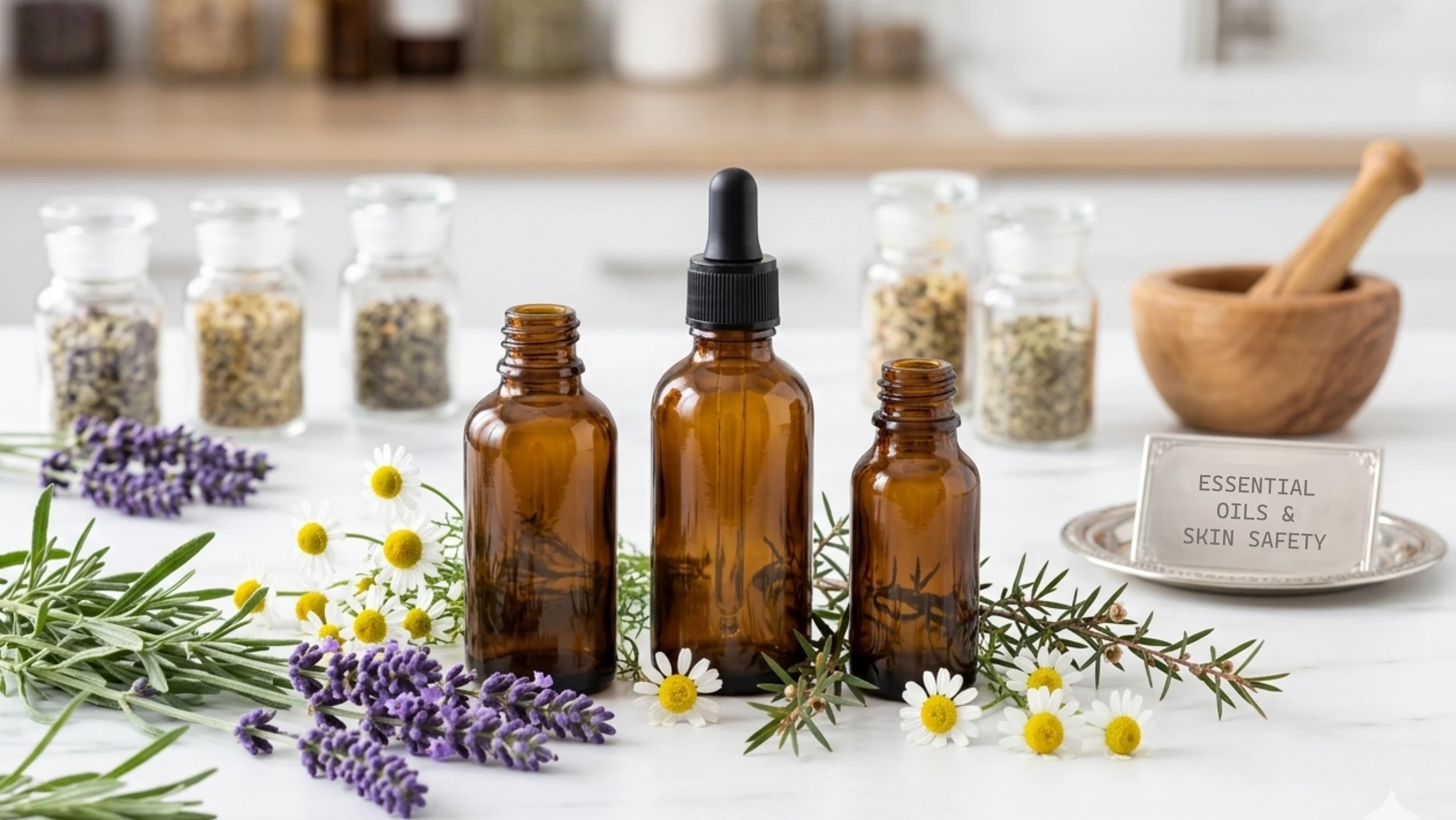
Essential oils are highly concentrated plant extracts typically created by distilling leaves, flowers, bark, or roots. Citrus oils, on the other hand, are usually cold-pressed.
Despite their name, they aren’t true oils like olive or coconut oil. Instead, they are volatile organic compounds (VOCs), meaning they evaporate quickly and carry intense, concentrated plant scents.
When used correctly, these therapeutic plant extracts support skin barrier repair and overall skin health. They are excellent additions to DIY skincare recipes to target specific concerns:
Unlike commercial personal care products that rely on synthetic fragrance blends (a common trigger for skin irritation), properly diluted essential oils offer a clean, natural alternative.
Essential oils are incredibly powerful. While most people tolerate them well when properly diluted, skipping safety steps can lead to adverse skin reactions.
Recommended Reading: For an industry-standard look at safety, pick up Essential Oil Safety (2nd Edition) by Robert Tisserand and Rodney Young.
Note on Formulation Limits: You will notice that the dilution guidelines here are slightly more conservative than the maximum limits found in Tisserand’s text. Because this guide is specifically designed for beginners and home formulators, I intentionally err on the side of caution to provide an extra layer of safety for sensitive, reactive, or compromised skin types.
If a supplier does not provide safety data or purity testing, do not use their products on your skin. Always look for brands that:
Reputable suppliers following these guidelines include Tisserand Aromatherapy, AromaEasy, Plant Therapy, Edens Garden, and Stillpoint Aromatics.
Essential oils should be used in very low concentrations, and even then, some people are more likely to react than others. Consider avoiding or limiting use if you are:
Essential oils are powerful and should never be used directly on the skin without mixing them into a fixed carrier oil (like Meadowfoam oil). Think of them like potent spices—you wouldn’t eat a spoonful of black pepper, but a pinch elevates a dish.
The dilution limits below apply only to the specific oils listed in this guide. Other essential oils may have entirely different safety thresholds, so always check reliable safety data before making any ingredient substitutions.
When blending more than one oil, the maximum percentages apply to the total amount of oils combined. For the best results and skin tolerance, keep your formulas simple and stick to just one or two essential oils in a blend.
Always perform a patch test before using a new blend, especially if you are pairing it with other strong or active skincare ingredients.
For water-based formulas (like baths or room sprays), you must use a proper emulsifier or solubilizer. DIY kitchen fixes like milk, witch hazel, glycerin, aloe vera, alcohol, or bath salts do not mix oil and water. Without a proper emulsifier, the essential oil will float on top of the water at 100% concentration. If you step into a bath like this, your skin comes into contact with undiluted oil droplets, which can cause immediate burns. Please don’t do this.
Do not take essential oils internally unless under direct professional guidance. Even oils considered perfectly safe topically can cause serious harm or toxicity to the mouth, throat, liver, and kidneys if swallowed.
These essential oils were specifically selected for use on human skin in homes where pets are present. They are not intended for use on pets or in diffusers. Avoid applying essential oils to areas of your body where pets may lick your skin. If you have concerns about a specific pet or an underlying health condition, consult a veterinarian familiar with essential oil safety.
If you are ever unsure about a reaction, a blend, or an application, talk with a qualified healthcare provider or a certified professional trained in aromatherapy.
| Category / Age Group | Maximum Total Essential Oil Dilution | Best Practices & Notes |
|---|---|---|
| Under 3 Months | 0% (Do Not Use) | Avoid all essential oil use. |
| 3 to 24 Months | Use only under professional guidance | Cautious, highly restricted use only. |
| 2 to 6 Years | 2% Max (0.5% preferred; 1% for rose absolute) | Stick to highly gentle, kid-safe oils. |
| 6 to 15 Years | 3% Max; 2% for rose absolute) | Safe for general family-friendly blending. |
| Adult Face | 1% Max; .5% for rose absolute) | Gentle concentrations protect facial skin. |
| Adult Eye Area | 0.5% Max; .25% for rose absolute) | Apply only to the orbital bone; avoid eyes. |
| Adult Body | 5% Max; 2.5% for rose absolute) | Standard maximum for body products |
| Deodorant Blends | 1% Max; .5% for rose absolute) | Keeps sensitive underarm skin free from irritation. |
| Pregnancy / Nursing | 2% Max; 1% for rose absolute) | Stick to conservative, pregnancy-safe profiles. |
These oils have been selected for their excellent safety profiles, versatility, and long history of success in skincare.
Apply at very low dilution only to the orbital bone and avoid direct eye contact.
To get the most out of your formulations without overloading your skin, try these proven duos. You can scale these ratios up or down to hit your target dilution percentage, depending on whether you are formulating for the face, body, or sensitive skin.
Essential oils can be expensive—and not everyone feels comfortable using them in skincare. My go‑to almost‑but‑not‑quite essential oil is Copaiba (Copaifera officinalis or Copaifera langsdorffii). Langsdorffii tends to be slightly more potent for pain relief, but both varieties are excellent.
Copaiba is technically a resin oil (oleoresin), not a true essential oil. But functionally, it behaves like a gentle, therapeutic active that can replace essential oils in many formulas. If you’re unsure about using essential oils, Copaiba is the perfect alternative—soothing, versatile, and incredibly beginner‑friendly. Here’s why I rely on it:
Just as Copaiba offers a gentler alternative to essential oils, hydrosols provide another way to benefit from plant aromatics without the strength or risks of essential oils.
Hydrosols are the pure, water-based byproducts of the essential oil steam distillation process. They contain tiny amounts of the plant’s aromatic compounds, making them incredibly mild and skin-friendly.
When working with hydrosols, keep these best practices in mind:
⚠️ Warning: Floral waters are not the same as hydrosols. Floral waters are typically just plain water mixed with synthetic fragrances or a drop of essential oil. They do not offer real therapeutic benefits and cannot reliably replace water in a skincare formulation.
If you experience any discomfort, redness, or irritation while using a product, follow these steps immediately:
If your country is not listed, contact your local emergency services or poison control center for guidance. You may be able to report adverse reactions to your country’s health authority or cosmetics safety board.
In my book, Simple DIY Skincare: The Complete Guide to Easy, Natural Recipes for Beginners, I show you how to safely incorporate essential oils into 15 handmade formulas—and when it is best to omit them. Grab your copy today to start creating gentle, effective skincare tailored to your skin type.